
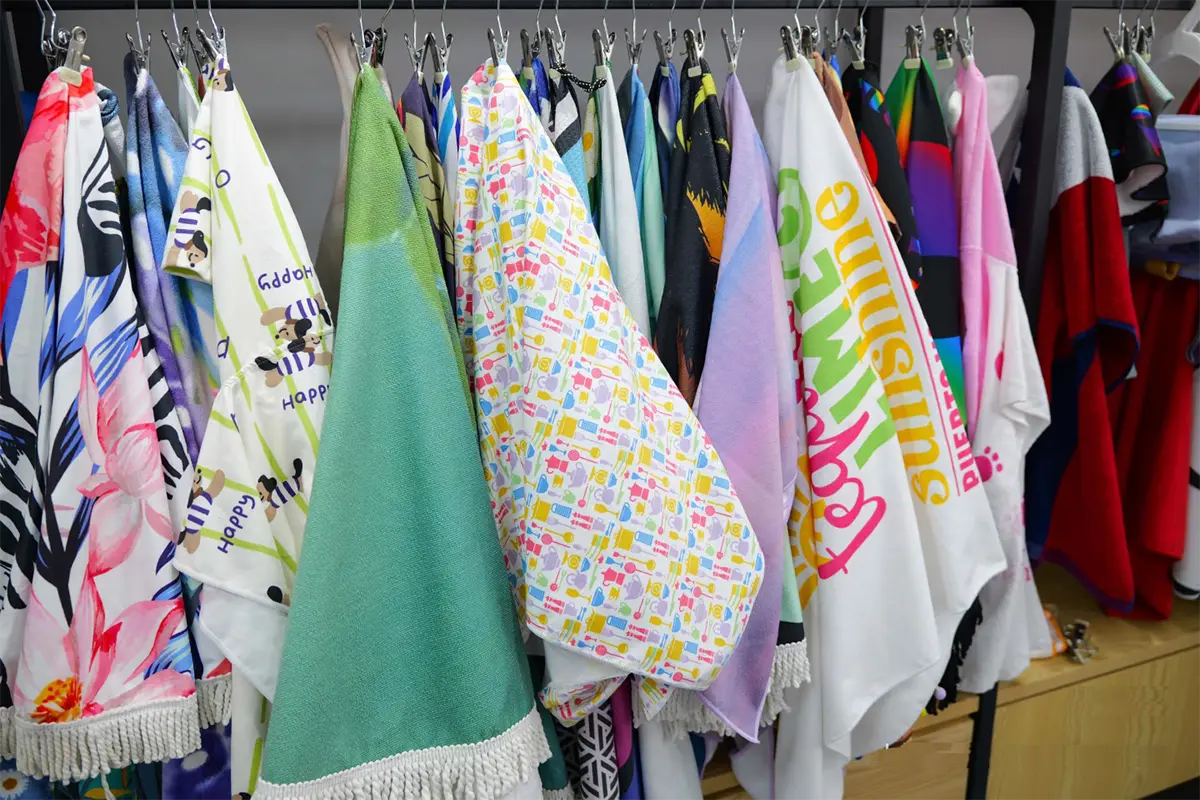
Choose a beach towel material by the job it needs to do: cotton terry is a useful starting point for a cushioned drying towel, cotton velour for a smooth printed face, flat-woven cotton for a draped resort style, and a suitable microfiber construction for compact travel or full-color artwork. Then compare the actual samples for water pickup, drying, folded volume and performance after washing. A fabric name alone cannot settle those decisions.
For a brand, hotel or event buyer, the material also affects logo methods, packaging and the experience customers receive after their first wash. Our custom beach towel options include cotton, microfiber and recycled blends. This guide explains how to turn those broad choices into a fabric specification that suppliers can quote consistently.
Beach Towel Materials at a Glance
Use this table to build a shortlist. It describes common reasons to consider each construction, not a guaranteed ranking of every towel sold under that name. Compare finished towels of the same intended size and with the proposed decoration.
Swipe or scroll horizontally to see all columns →
| Material and construction | Consider it for | Feel and packing | Check before approval |
|---|---|---|---|
| Cotton terry | Pool drying, hotel programs and retail towels with a cushioned feel | Looped surface; pile adds volume when folded | Water pickup, loop snagging, lint, drying in your laundry system |
| Cotton velour | Illustrated retail towels and designs needing a smoother display face | Cut-pile face; a terry reverse may retain a different texture | Both faces, print definition, surface change after laundering |
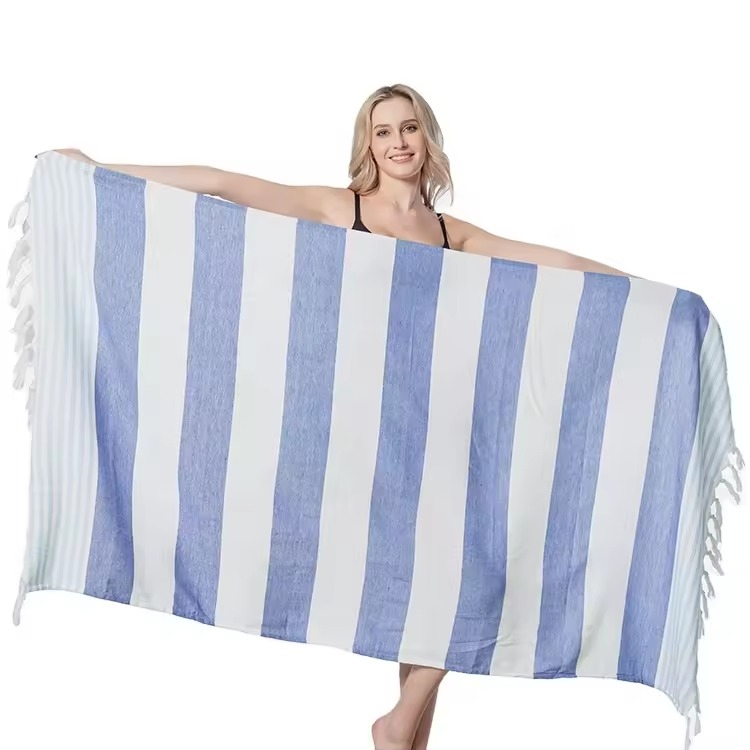
| Turkish-style flat-woven cotton | Resort shops, wraps and collections emphasizing drape and woven stripes | Flat body without deep terry pile; fringe can add bulk at the ends | Actual gsm, opacity, wet drape, shrinkage and fringe security |
| Microfiber suede or smooth-face fabric | Travel collections, event kits and detailed printed designs | Low-profile surface that can fold into a compact package | Exact fiber percentages, wet hand feel, drying and usable print detail |
| Microfiber waffle | Travel or beach collections seeking a more textured surface | Raised grid or cellular texture; folded volume depends on construction | Cell texture after washing, snagging and artwork across the relief |
| Cotton blends | Projects balancing a particular hand feel, fabric structure and decoration | Varies with blend percentage and where each fiber sits in the towel | Composition of both faces, water pickup and decoration compatibility |
| Recycled cotton or polyester blends | Collections with a defined recycled-content sourcing requirement | Determined by yarn, structure and finish rather than the recycled claim | Content evidence, consistency, wash performance and approved claim wording |
Separate Fiber, Construction, Weight and Finish
“Cotton,” “waffle,” “300 gsm” and “soft finish” answer different questions. A useful specification includes all four. Otherwise, two suppliers can quote visibly different products while both appear to meet a brief such as “premium beach towel.”
- Fiber: cotton, polyester, polyamide or a stated blend. This identifies what the yarn is made from. “Microfiber” describes fiber fineness; it does not identify one fixed composition.
- Construction: terry loops, a velour face, flat weave or waffle texture. This describes how the surface and body are built. Waffle does not automatically mean cotton, and a smooth surface does not prove that a towel is polyester.
- Weight: gsm means grams per square meter of fabric. It describes mass per area, not a complete quality grade.
- Finish: processing that changes the surface or hand feel. The approved finish belongs in the specification because an unwashed swatch may feel different from the towel after repeated use.
CottonWorks treats fiber, yarn, fabric construction and finishing as separate parts of assessing home-textile quality. For buyers, the practical consequence is simple: keep a labeled sample beside the written specification. A photograph can show texture and color, but it cannot verify composition, absorbency or recycled content.
Cotton Terry, Velour and Flat Weave: Different Buying Decisions
Cotton terry: start with the drying and laundry experience
Terry exposes yarn loops at the surface. For a towel that guests use immediately after swimming, this gives you a familiar textured option to assess for body drying and comfort. Cotton itself absorbs water; the finished towel's behavior also depends on its yarns, pile and processing.
Compare loop height and density by handling the sample, then use it wet. A full-looking pile may suit a resort retail collection, while a hotel laundry team may prefer a construction that handles its available drying time and storage space. Inspect pulled loops and roughness after the intended wash routine. “Combed,” “long-staple” and “low-twist” should lead to specific questions about the offered yarn, rather than replace a finished-towel trial.
Cotton velour: compare the display face with the drying face
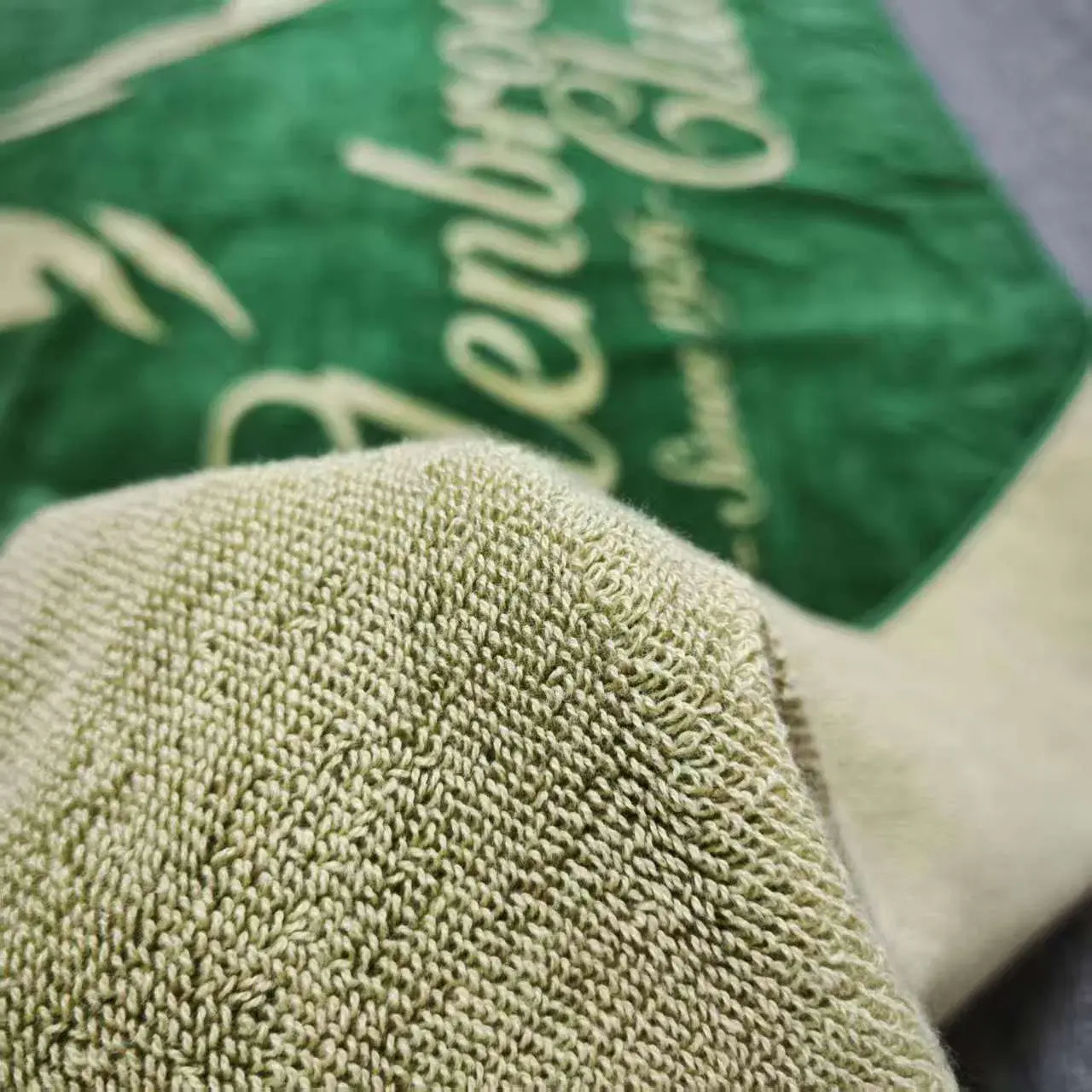
In towel sourcing, velour commonly describes a sheared pile surface. The smoother face can help artwork read more clearly than it would over prominent loops. A towel may combine that face with terry on the reverse, so ask for photographs and a physical sample of both sides.
This is worth sampling for illustrated beach towels sold in a shop, where the image is a major part of the purchase. Check how the print looks when the pile is brushed in different directions, whether small lettering remains legible and how the surface changes after washing. Evaluate drying with the side customers will actually use; do not assume that both faces behave identically.
Turkish-style flat weave: choose it for the intended drape and format
A Turkish-style towel is a style description, often associated with a flat woven body, stripes and fringe. It is not a fiber name and does not establish that the cotton was grown, or the towel manufactured, in Türkiye. Specify the actual cotton or blend content and any origin requirement separately.
For a resort wrap or a coordinated gift collection, the drape and woven appearance may matter more than a plush feel. A flat body can pack differently from terry, but “flat weave” does not promise a lightweight towel: compare actual gsm, finished weight and folded dimensions. Test coverage when wet, and check whether fringe tangles or loosens in the planned laundry process.
Microfiber: Confirm the Composition and Surface Together
A microfiber towel may be polyester or a polyester/polyamide blend. TowelWise's listed options include 100% polyester and 80% polyester / 20% polyamide. Those are different specifications, not interchangeable ways to describe the same fabric. Ask which one is being quoted, then identify the surface, weight and intended decoration.
Fine fibers and the spaces within a fabric can help it collect and move water even when its constituent fibers behave differently from cotton. Supplier explanations of split polyester/polyamide microfiber show why fiber geometry matters. However, a cleaning-cloth construction does not prove how a beach towel will feel or perform; compare the actual towel sample.
Suede and smooth-face microfiber
Consider a low-profile face when the brief prioritizes compact packing and detailed artwork. Handle it against damp skin as well as dry hands: a smooth microfiber towel has a different sensory experience from a looped cotton towel. One customer may like that light contact, while another expects a thick towel to rub down with.
Try the planned fold or roll inside the proposed pouch. Check whether the towel is easy to put back after use, whether the label or elastic creates a bulky spot and whether a double-sided design reads correctly on each face. These are more useful approval checks than an unsupported promise that every microfiber towel is “ultra-compact.”
Waffle microfiber
Waffle adds a visible grid or cellular texture. It can suit buyers who want a textured alternative to a suede-like face, but the relief changes how the towel feels and how artwork sits on the surface. Compare a plain area, a solid printed area and the smallest logo detail on the sample.
Wash it before selecting the final texture. Record whether the cells retain their shape, whether the edges curl and whether the fabric still fits the chosen pouch. Confirm the fiber blend independently: the word “waffle” tells you nothing about recycled content or polyester percentage.
Cotton Blends and Recycled Materials Need a Complete Description
A cotton/polyester blend can be developed around a particular balance of surface feel, construction and decoration. Ask whether the fibers are blended in the same yarn or arranged differently between the face, reverse and ground structure. Two towels with the same overall composition can expose different fibers to the user's skin or the printing process.
For mechanically recycled cotton, the recycling process can shorten fibers, so yarn design and blending become relevant to the finished fabric. CottonWorks' recycled-cotton guidance explains this processing consideration. It does not mean that a particular recycled towel is automatically weak; request the actual composition and assess lint, seams and surface condition after washing.
RPET means recycled polyethylene terephthalate, a type of polyester. It describes the feedstock source. It does not, by itself, guarantee softness, fast drying, sand release or a particular environmental outcome for the finished towel. A recycled polyester suede fabric and a recycled polyester waffle fabric still need separate evaluation.
If recycled content is part of the purchasing brief, state the required percentage and which components it applies to. Where certification is required, ask for current evidence relevant to the offered material and order. Textile Exchange's RCS and GRS framework addresses recycled material verification and chain of custody. A company certificate or a sample's appearance alone is not a substitute for checking the scope behind a product claim.
What Gsm Tells You—and What It Leaves Out
Gsm helps you calculate fabric mass and compare versions of a similar construction. It does not directly measure thickness, softness, durability or drying time. A 300 gsm flat weave, waffle and terry towel can have different thicknesses and folded volumes because their yarns and structures differ.
Approximate fabric mass = width in meters × length in meters × gsm. For an 80 × 160 cm towel at 300 gsm, that is 0.8 × 1.6 × 300 = 384 g. This is an estimate for the fabric body; hems, labels, embroidery, fringe and other details affect the finished piece. Use an actual packed sample for shipping and packaging decisions.
Increasing the dimensions also increases the amount of fabric, even if gsm stays the same. Before choosing a heavier fabric to make a towel feel more substantial, compare it at the intended size. The beach towel size guide explains coverage, shape and packing considerations.
Keep three performance questions separate: how quickly does the towel wet out, how much water does it hold, and how long does it take to dry under the intended conditions? A quick initial water pickup does not answer the other two. Airflow, humidity, how the towel is hung and how wet it starts all affect a drying comparison.
“Sand-free” also needs a defined condition. Sand release depends on the surface, the sand and whether either is wet. Try shaking dry sand from the sample, then repeat with a damp towel and damp sand. Record what remains in the face, edges and fringe. Use those observations to decide whether a specific claim is supportable; do not turn a fabric nickname into a promise that sand can never cling.
Choose a Shortlist Around Your Customer's Use
Swipe or scroll horizontally to see all columns →
| Buying situation | Useful starting comparison | Decision to make with samples |
|---|---|---|
| Hotel or pool operator | Two cotton terry constructions in the required size | Guest feel, actual laundry turnaround, edge durability and storage volume |
| Retail brand with illustrated collections | Cotton velour versus a printable smooth microfiber | Print detail and display appearance versus the drying feel customers expect |
| Travel or outdoor brand | Microfiber suede versus waffle at the intended coverage | Packed dimensions, damp-skin feel and drying during realistic use |
| Resort gift shop | Flat-woven cotton versus cotton velour | Drape and fringe presentation versus a more cushioned towel experience |
| Event or promotional buyer | Printable microfiber versus a cotton option with simpler branding | Recognizable artwork, useful finished size and cost of the complete kit |
| Brand with recycled-content requirements | Documented recycled versions of the shortlisted construction | Content evidence and performance against the same product requirements |
These are starting points for comparison, not rules that exclude other materials. For example, a hotel may sell compact travel towels in its shop while using cotton terry at the pool. Describe those as separate products so one specification is not forced to satisfy incompatible expectations.
Select the Fabric and Logo Method Together
A material choice can limit how a design is produced. Reactive printing is an option for compatible cotton constructions; sublimation is used on suitable polyester fabrics. A polyester/polyamide blend needs its own assessment rather than inheriting the print expectations for 100% polyester.
For a woven jacquard design, the pattern is developed with the weave and yarn colors. For embroidery, inspect the stitched area and backing against the fabric's weight and texture. A dense logo on a light towel may create a stiff patch, while tiny lettering can lose clarity against raised loops.
Send artwork while selecting the fabric, and sample the actual design on the proposed construction. Compare color, edge definition, hand feel and the reverse. The beach towel logo guide covers when to use printing, jacquard, embroidery and other branding methods.
Check the Sample Before and After Laundering
Agree on the care conditions and what counts as an acceptable result before approval. For a hotel order, involve the laundry operator; for retail, use the intended care instructions. The following is a practical comparison process, not a claim that the towel has passed a laboratory standard.
- Record the starting sample. Label its material, construction, dimensions, gsm and decoration. Photograph both faces and measure the dry towel without stretching it. Keep an unwashed reference where possible.
- Check use and packing. Try body drying, wrapping and the planned fold. Note skin feel, coverage, water pickup and whether the packed size works with the chosen pouch or paper band.
- Wash under the agreed conditions. Record detergent, temperature, drying method and number of cycles. Use the same conditions for a valid comparison; do not change the care routine to favor one sample.
- Repeat the measurements and handling. Check size change, skew, color, lint, pile or waffle texture, hems, fringe, labels and the decorated area. Recheck the fit inside the packaging.
- Approve a written result. Identify the accepted sample and any agreed tolerances. If a material, finish or decoration changes, review the affected checks again before relying on the earlier approval.
Where a quantified performance requirement matters, define a suitable test method and acceptance level with the supplier or laboratory. For example, AATCC TM79 addresses textile water absorbency; it is not a universal pass mark for softness, drying time or overall towel quality. Request evidence for the relevant fabric or finished product, with the test conditions identified.
What to Send for a Comparable Fabric Quotation
A detailed inquiry prevents a lower quote from silently becoming a smaller, lighter or differently constructed towel. Include the following points, marking any undecided item as a choice to sample.
- Use: retail, hotel laundry, travel or event distribution; describe the expected drying and packing conditions.
- Fabric: exact fiber percentages, construction on both faces, gsm target and any agreed tolerance.
- Dimensions: finished size, shape, whether fringe is included, and whether an after-wash size matters.
- Design: artwork, colors, decoration method, coverage, front/reverse requirements and label placement.
- Finish and packing: edge treatment, hand-feel reference, care instructions, fold, pouch or band.
- Evidence and approval: requested composition or recycled-content documentation, sample checks and any necessary test reports.
- Order details: quantities per color, destination, required delivery date and the accepted sample reference when available.
Start with two well-defined fabric candidates if the material is still undecided. Through sample development, the chosen fabric, size, artwork and finishing can be brought together in one physical towel. Keep that approved towel and its specifications aligned so the bulk order follows the product you actually evaluated.
Frequently Asked Questions
Related Guides & Product Resources
- Beach Towel Size Guide: Dimensions, Shapes & Buying Tips
- Beach Towel Logo Methods: Printing, Jacquard & Embroidery
- Custom Beach Towel Styles & Specifications
- Beach Towel Sample Development
- Beach Towel Design Gallery
Tell us how the towel will be used, your preferred feel, finished size, target fabric weight, artwork, quantity per color and destination. We can discuss suitable sample options before you approve a bulk specification.
Discuss Your Fabric Options